
Every business that moves pallets eventually faces the same question: should you rent a forklift or buy one? The right answer depends on how many hours the machine will work each month, how long the need will last, and how much cash you want tied up in equipment.
As a general rule, renting makes sense for short-term projects, seasonal peaks, and specialized jobs. Buying usually costs less over time for equipment you will use every day for several years. Many Phoenix businesses end up doing both by owning a core fleet and renting to cover the surges.
This guide compares the costs, flexibility, and maintenance responsibilities of each option so you can decide which one fits your operation. It also explains how Gunnar Forklift Sales can help whether you choose to rent, buy, or do a little of each.
Rent or Buy a Forklift: The Quick Comparison
Before getting into the details, it helps to see the two options side by side. Neither choice is better in every situation. Each one shifts cost, risk, and responsibility in a different direction.
| Factor | Renting a forklift | Buying a forklift |
| Upfront cost | Low. You pay the rental rate and any delivery fee. | Higher. You pay the purchase price or arrange financing. |
| Long-term cost | Adds up quickly when the rental runs for years. | Lower cost per hour with steady daily use. |
| Maintenance | Handled by the rental provider. | The owner’s responsibility, in-house or through a service provider. |
| Flexibility | Return or swap the machine as needs change. | Fixed to the capacity and fuel type you purchased. |
| Availability | Depends on what the rental fleet has in stock. | Always on site and ready to work. |
| Best for | Projects, seasonal peaks, trials, and specialty lifts. | Daily, year-round use for several years. |
The sections below explain when each option tends to win and how to compare the true cost of both before you commit.
When Renting a Forklift Makes Sense
Renting shifts most of the cost and responsibility to the rental provider. That makes it the better fit whenever the need is temporary, unusual, or hard to predict.
Short-Term Projects and Seasonal Peaks
A construction phase, a warehouse move, an inventory count, or a holiday shipping rush may only need extra lift capacity for a few weeks or months. Renting covers that window without leaving an idle machine on the lot for the rest of the year.
Gunnar Forklift Sales offers rentals by the day, the week, the month, or longer, so the rental period can match the length of the project instead of the other way around.
Specialized or Heavy-Capacity Jobs
Some jobs call for equipment your fleet does not normally need. Unloading an oversized machine, working on rough terrain, or handling a one-time heavy lift may require a rough-terrain forklift or a higher-capacity unit than you own.
Renting the right machine for that task is usually far cheaper than buying a specialty forklift that will sit unused afterward. It is also safer than pushing a smaller forklift past its rated capacity.
Testing a Machine Before You Buy
A rental period is a practical way to confirm whether a certain capacity, fuel type, mast height, or tire type works in your facility. Running a propane forklift for a month in your own aisles will tell you more than any spec sheet.
If the machine performs well, you can shop for a similar model in the used inventory with confidence.
Preserving Cash Flow
A rental is an operating expense that spreads the cost over the months you actually use the equipment. For a newer business, or one that wants to keep capital available for inventory and payroll, that predictability can outweigh the long-term savings of ownership.
When Buying a Forklift Makes Sense
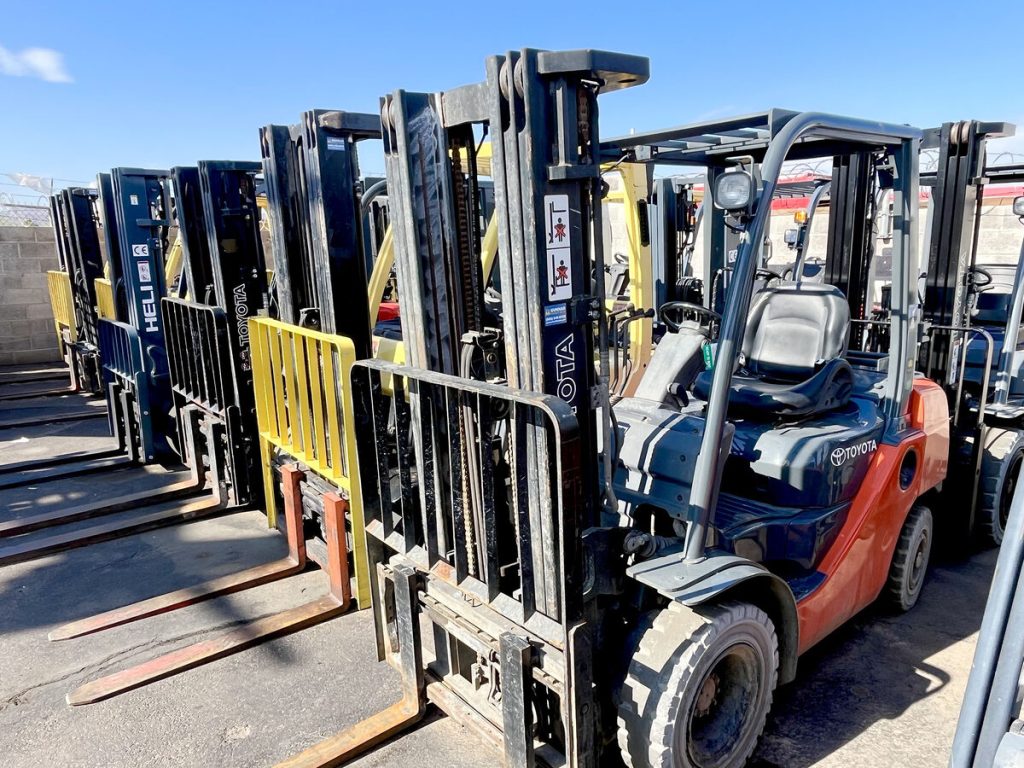
Ownership rewards consistency. If a forklift is going to run most days for years, buying almost always costs less over the life of the machine.
Daily Use Over Several Years
A single-shift operation typically puts 1,500 to 2,000 hours a year on a forklift. At that pace, rental payments add up quickly, while a purchased machine spreads its cost across many years of service.
If you can already predict that the forklift will be busy next year and the year after, ownership is usually the more economical path.
Lower Cost Per Hour
Once the purchase price is paid, the ongoing costs of ownership are maintenance, tires, fuel or battery charging, and the occasional repair. Spread across thousands of operating hours, those costs are generally lower per hour than a long-term rental rate.
A purchased forklift also retains resale value. A well-maintained machine can be sold or traded when your needs change, which recovers part of the original investment.
Control Over Your Equipment
When you own the forklift, it is always available. There is no waiting on fleet availability during a busy season, no rental return date, and no restriction on attachments, modifications, or how many hours it runs.
You also control the maintenance schedule, which matters for businesses that want a consistent, well-documented service history on every machine they operate.
Why Used Forklifts Change the Math
The biggest argument against buying is the upfront price, and a quality used forklift lowers that barrier significantly. A used machine from a reputable dealer costs a fraction of a new one and can still deliver years of dependable service.
That means the break-even point between renting and buying arrives much sooner. For many businesses, a used forklift pays for itself in rental savings within the first year or two of steady use. Our used forklift buying guide and our article on how many hours is too many for a used forklift explain how to evaluate the equipment before you buy.
Comparing the True Cost of Renting Versus Buying
The rental rate and the purchase price are only the starting points. To compare the two options fairly, estimate the total cost of each over the same period of time.
Find Your Break-Even Point
Start by estimating how many months you will need the forklift and how many hours it will run each month. Then compare the total rental cost for that period with the purchase price plus expected maintenance and repairs, minus what the machine will be worth when you are done with it.
A common rule of thumb is that a forklift needed for most of the workweek for more than about a year is usually worth buying. A forklift needed a few days a month, or for a project with a clear end date, is usually worth renting. Your own numbers should drive the decision, but that rule is a reasonable place to start.
Costs Buyers Often Overlook
Ownership brings expenses beyond the purchase price. Budget for:
- Preventive maintenance and inspections
- Tires, chains, hoses, and other wear items
- Battery replacement on electric forklifts
- Unplanned repairs and the downtime that comes with them
- Insurance and storage
- Operator training and certification
- Transportation when the machine needs shop service
A planned maintenance program turns most of these into predictable line items instead of surprises, which makes the ownership side of the comparison much easier to estimate.
Costs Renters Often Overlook
Rentals have their own hidden costs. Ask about:
- Delivery and pickup fees
- Minimum rental periods
- Hour allowances and charges for running the machine beyond them
- Damage waivers or insurance requirements
- Fuel or charging responsibilities
- What happens to the rate if the project runs long
A month-to-month rental that quietly stretches into a second or third year is one of the most common ways a business ends up paying more than a used forklift would have cost.
Maintenance and Support: Who Is Responsible?
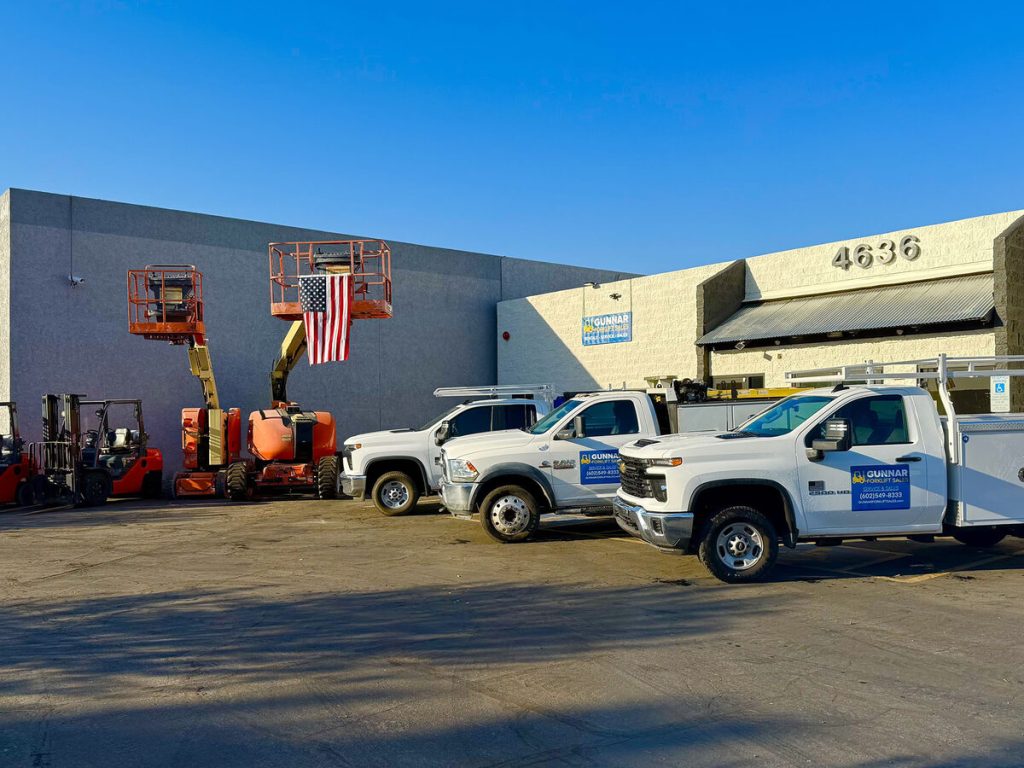
Maintenance is one of the clearest differences between the two options, and it deserves its own look.
With a rental, the provider maintains the equipment and is responsible for keeping it in working order. If a rental forklift from Gunnar Forklift Sales has a problem, the support team is a phone call away, which keeps downtime short.
With ownership, maintenance is your responsibility, but that does not mean you have to handle it yourself. Gunnar Forklift Sales provides field service at your facility, shop service for larger repairs, and planned maintenance schedules built around your fleet, hours, and application.
Arizona heat adds urgency to that decision. Cooling systems, batteries, hydraulic seals, and tires all wear faster in summer conditions, so an owned forklift without a maintenance plan is more likely to fail when it is needed most.
Questions to Ask Before You Decide
Work through these questions with your team before choosing. The answers usually point clearly in one direction.
- How many hours per week will the forklift actually run?
- Does the need have a clear end date, or is it ongoing?
- Will the same capacity, fuel type, and mast height work a year from now?
- Is the job a one-time specialty lift or routine daily work?
- Do you have the staff or a service partner to handle maintenance?
- How important is it to keep capital available for other parts of the business?
- Would a quality used forklift fit the budget where a new one does not?
- Could renting first help you confirm the right machine before buying?
If most of your answers point to steady, predictable, long-term use, buying is likely the better value. If they point to short, uncertain, or specialized needs, renting is the safer choice.
A Common Approach: Own the Core Fleet, Rent the Surge
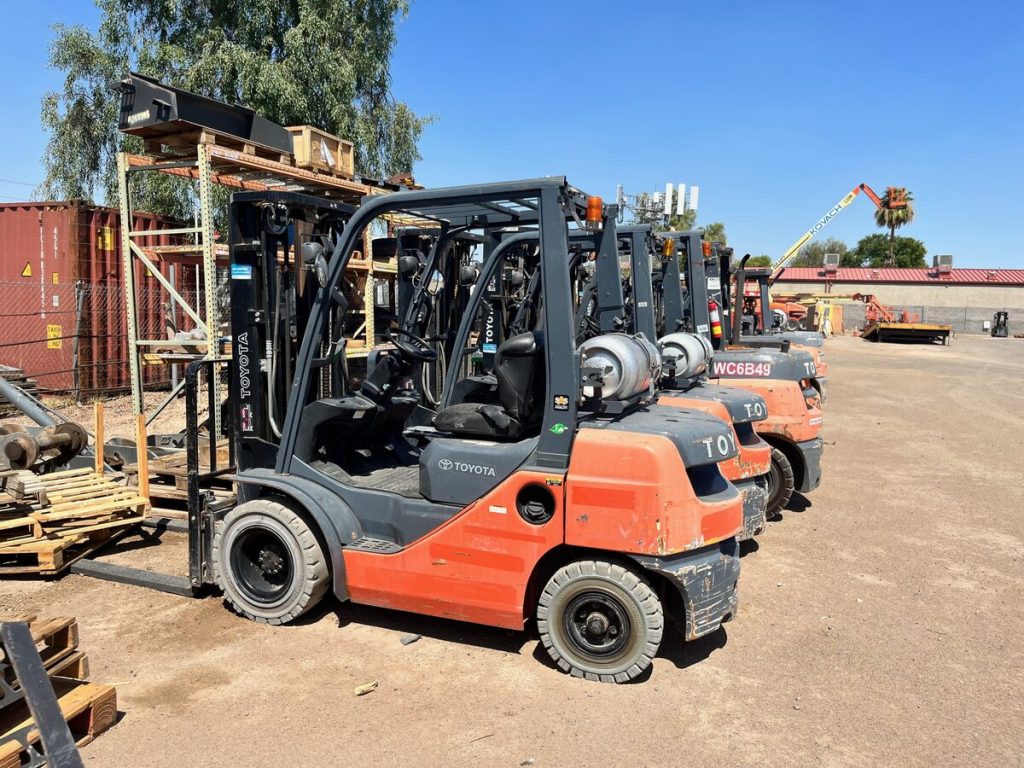
For many warehouses, distribution centers, and manufacturers, the best answer is not rent or buy. It is both.
Owning the forklifts that run every day keeps the cost per hour low and guarantees availability. Renting additional units during peak seasons, special projects, or while an owned machine is in the shop covers the gaps without paying for capacity that sits idle most of the year.
This approach also makes fleet planning simpler. You can size your owned fleet to the baseline workload and let rentals absorb the variation, instead of buying for the busiest week of the year.
Rent or Buy With Gunnar Forklift Sales
Gunnar Forklift Sales helps businesses across Phoenix and Arizona with both sides of this decision. Our used forklift inventory includes inspected, fairly priced machines from brands such as Toyota, Hyster, Doosan, Komatsu, and Yale. Our forklift rentals include propane, diesel, and rough-terrain models, available by the day, week, month, or longer, with pickup at our Phoenix location or delivery to your job site.
Whichever direction you choose, the same team provides inspections, field service, shop repairs, and planned maintenance to keep the equipment working.
Call Gunnar Forklift Sales at (602) 549-8333 or request a quote to talk through whether renting or buying makes more sense for your operation.